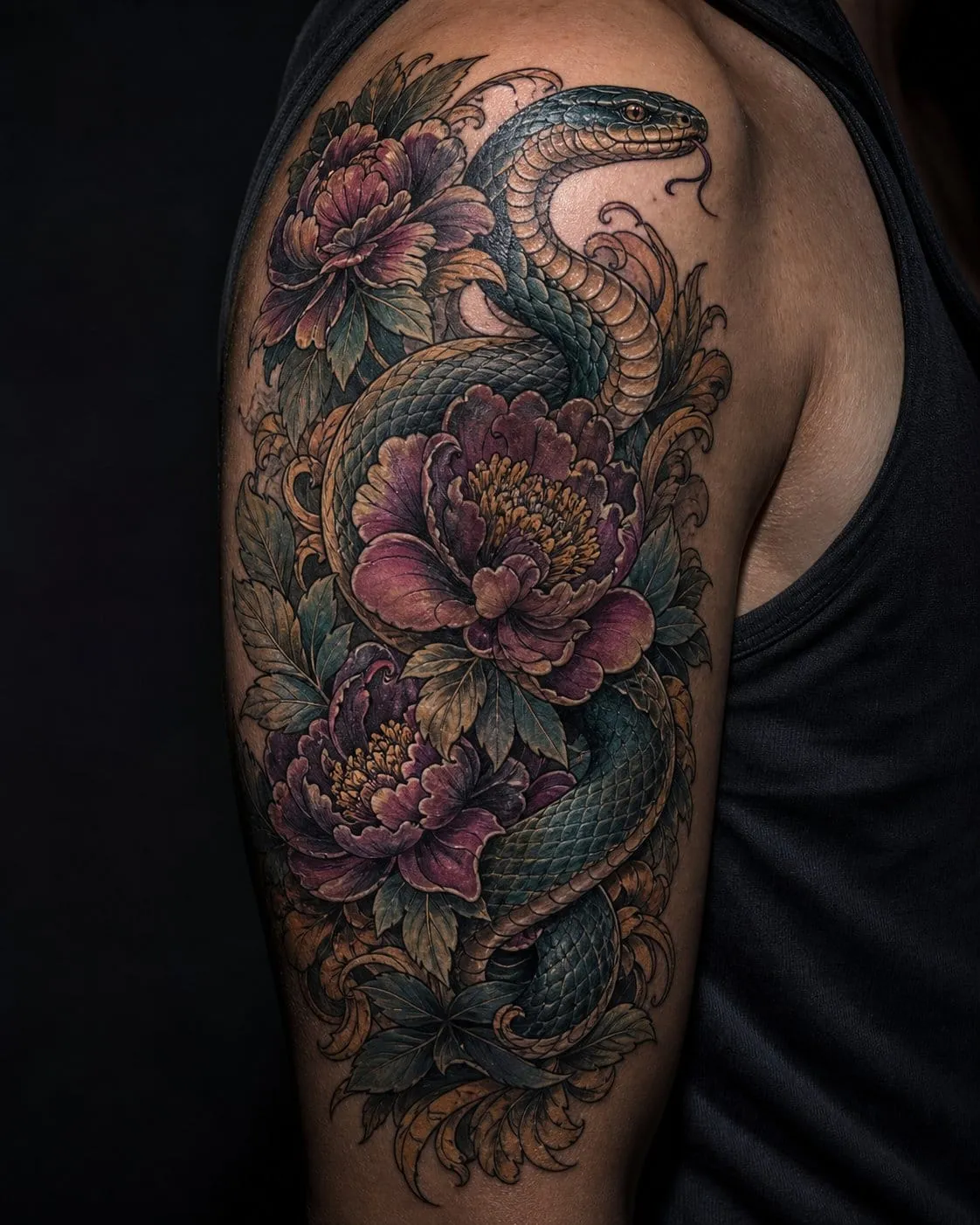
 AI concept
 Style guide
Neo-Traditional
Traditional bones, illustrative depth.
Neo-traditional keeps the strong outlines and readable structure of traditional work but adds softer shading, richer palettes and ornamental detail. It is the style for people who want a classic-feeling snake with a more illustrated, almost art-nouveau personality.
What defines it
- Bold outlines with varied line weight
- Rich, muted palettes — teal, plum, ochre, sage
- Gradients and soft shading inside solid shapes
- Decorative framing: filigree, beads, florals
How snakes behave here
Snakes are often paired with botanical elements — peonies, leaves, roses — and given expressive, slightly stylized faces. Coils are decorated and the body may be inlaid with pattern rather than realistic scales.
Where the detail works
More room for ornament than traditional, but still relies on clear shapes. Best detail lives in the florals and the facial expression.
Best sizes
Medium to large. Needs room for ornament to breathe.
Common combinations
PeonyRoseBotanical leavesMoon phasesPortrait elements
Good placements
This style reads best on these areas:
What to ask your artist
- How will the florals frame the snake without crowding it?
- Which palette will age well and suit my skin?
- Can you show how the line weight will vary?
Honest limits
Small sizes lose the ornament that defines the style. Below roughly 10cm it begins to read as generic traditional.
Explore the style
Read more in the field guide, or start a concept in this style.
Related designs
See all → AI concept  Original plate
 From vague idea to a concept you can take to an artist.
Explore the library, save what moves you, then build a direction — style, species, placement, size and mood — and turn it into a brief.