Styles
Tattoo styles, explained
A style is a visual language — its own line weight, shading and history. The same cobra in traditional versus fine line is a different tattoo. Learn the languages before you speak.
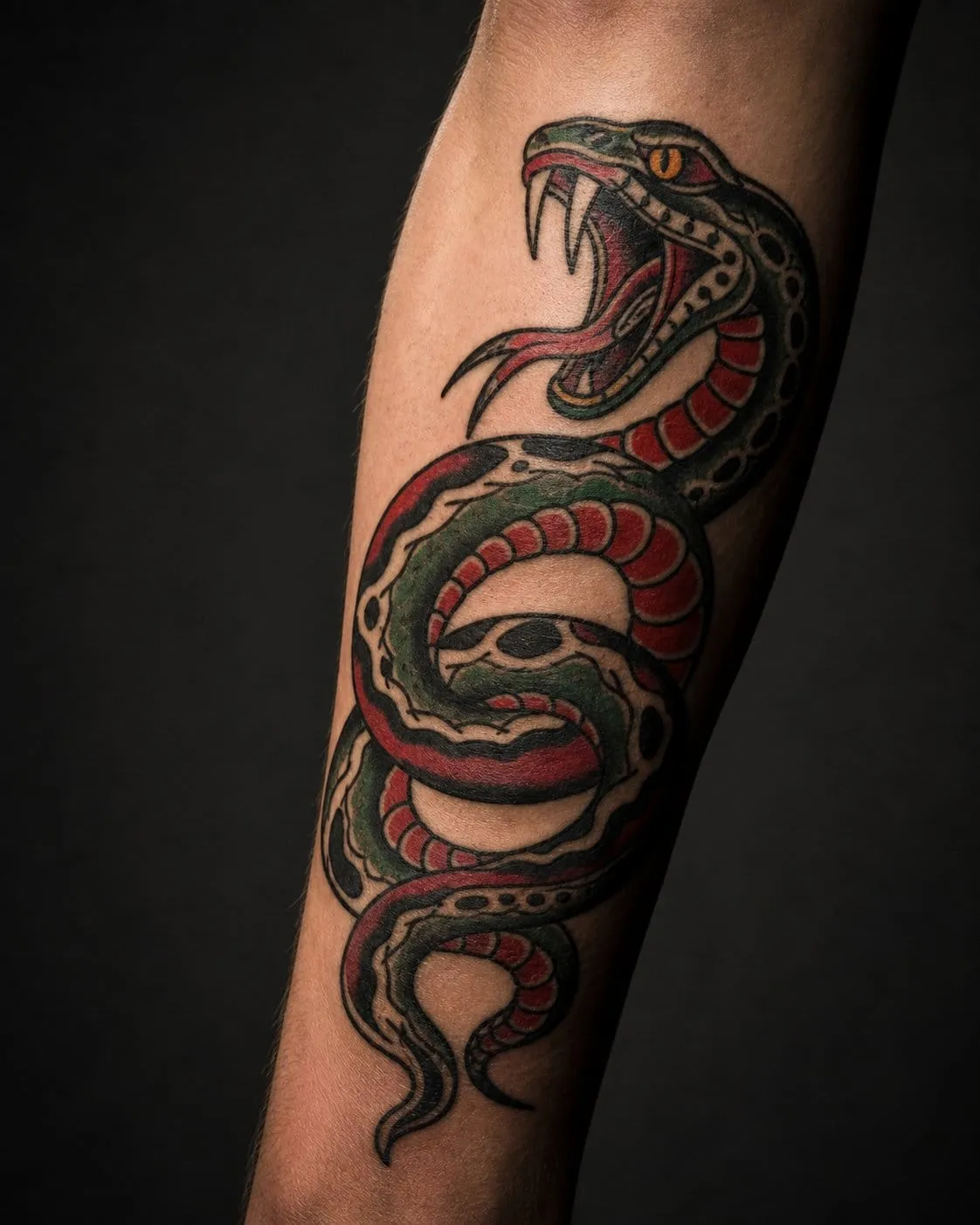
American Traditional
Bold lines, hard black, primary colors.
American traditional is the bedrock of Western tattooing — a language of thick black outlines, solid color packed flat, and compositions that read clearly from across a room. A traditional snake is a coiled, confident creature: you know what it is instantly, and it will still read that way in thirty years.
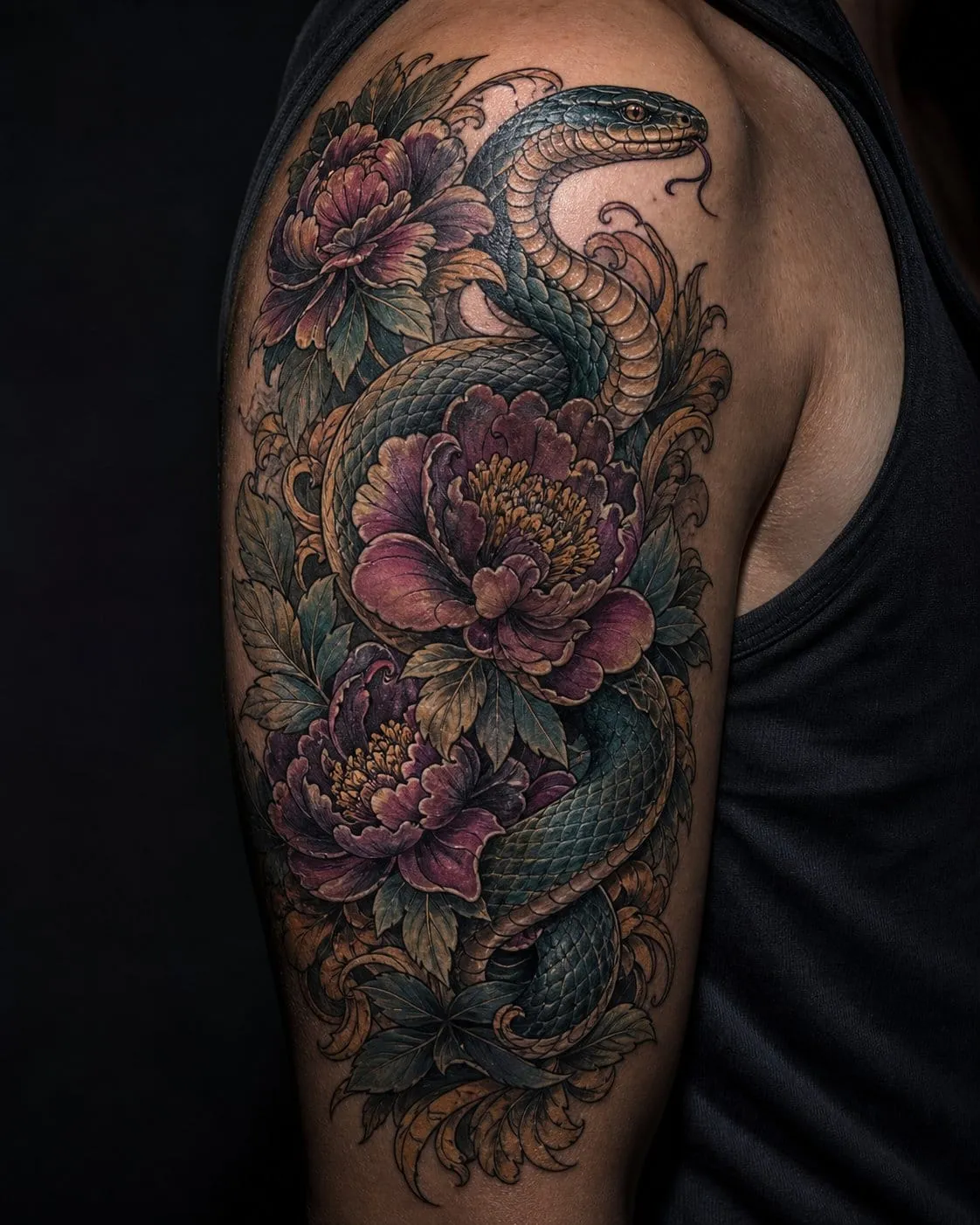
Neo-Traditional
Traditional bones, illustrative depth.
Neo-traditional keeps the strong outlines and readable structure of traditional work but adds softer shading, richer palettes and ornamental detail. It is the style for people who want a classic-feeling snake with a more illustrated, almost art-nouveau personality.
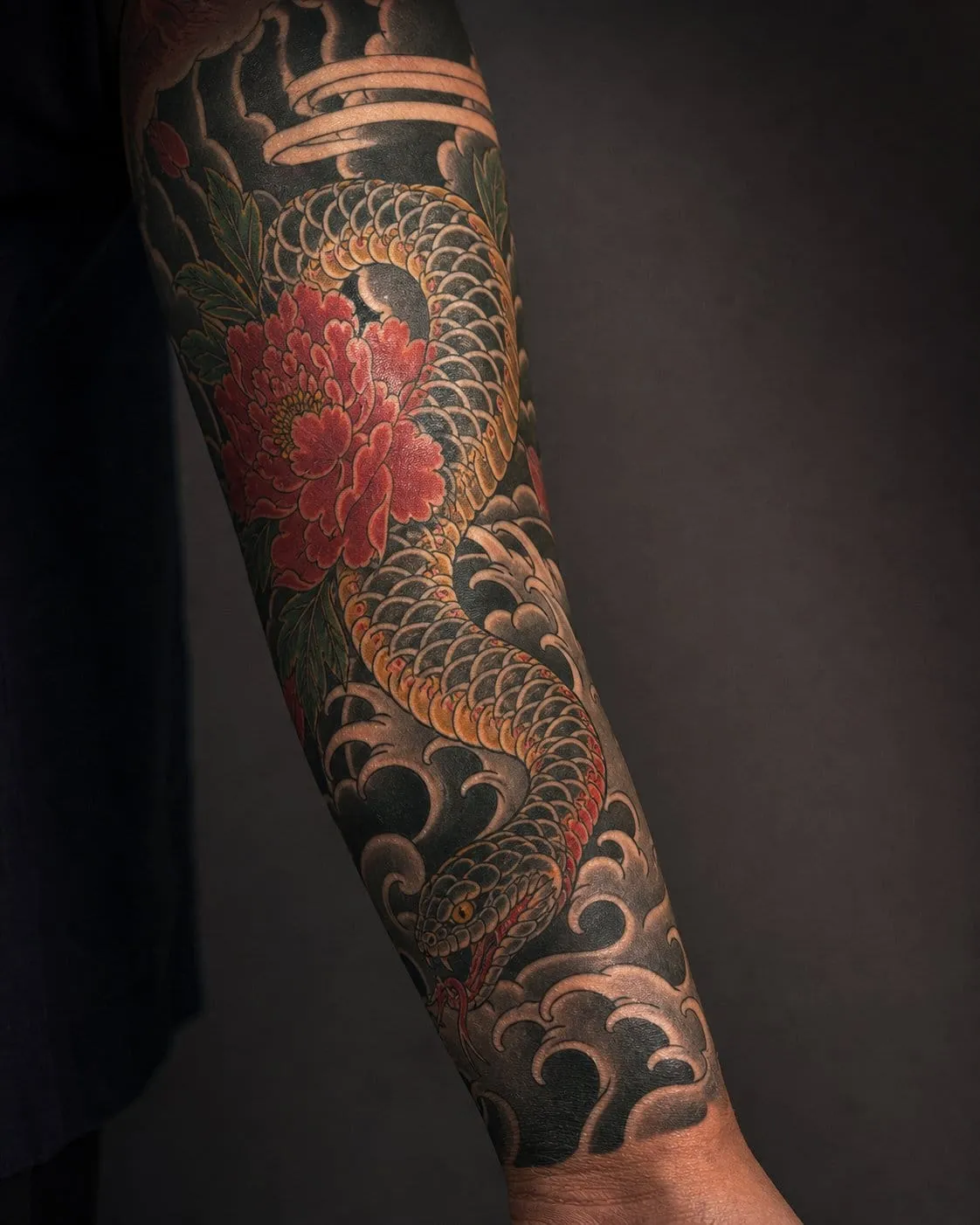
Japanese
Wind, water, and the guardian serpent.
In Japanese tattooing the snake — hebi — is a guardian and a bringer of good fortune, tied to water and change. Japanese snakes are long, flowing, and built into larger compositions with waves, clouds and peonies. The style favors bold color, wind-bar backgrounds and strong diagonal movement.
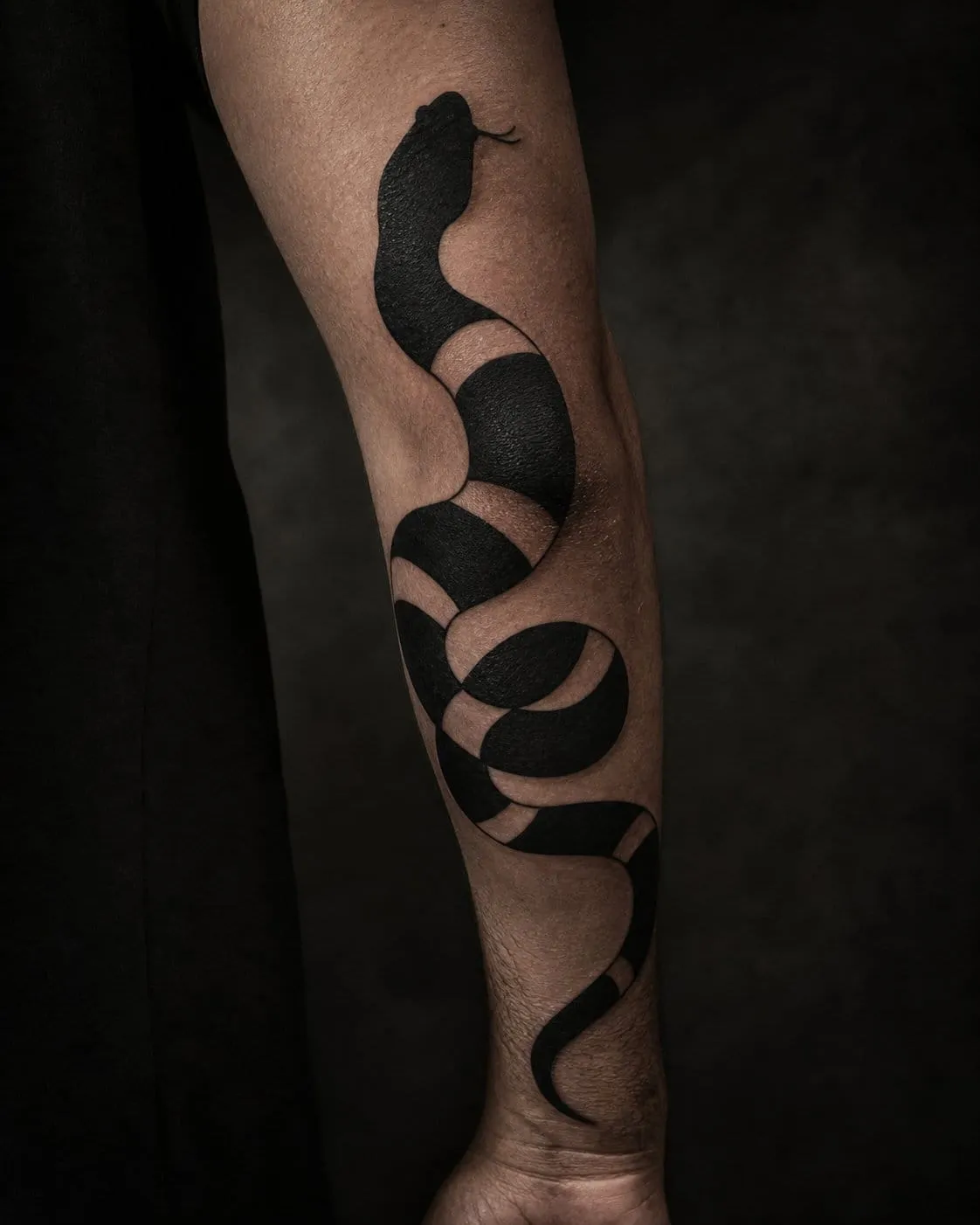
Blackwork
Solid black, maximum contrast.
Blackwork is exactly what it sounds like: designs built from solid black, heavy negative space and high contrast. A blackwork snake is graphic and unmissable — less about texture and more about shape, rhythm and the silhouette the body carves out of light.
Fine Line
Single-needle delicacy and quiet detail.
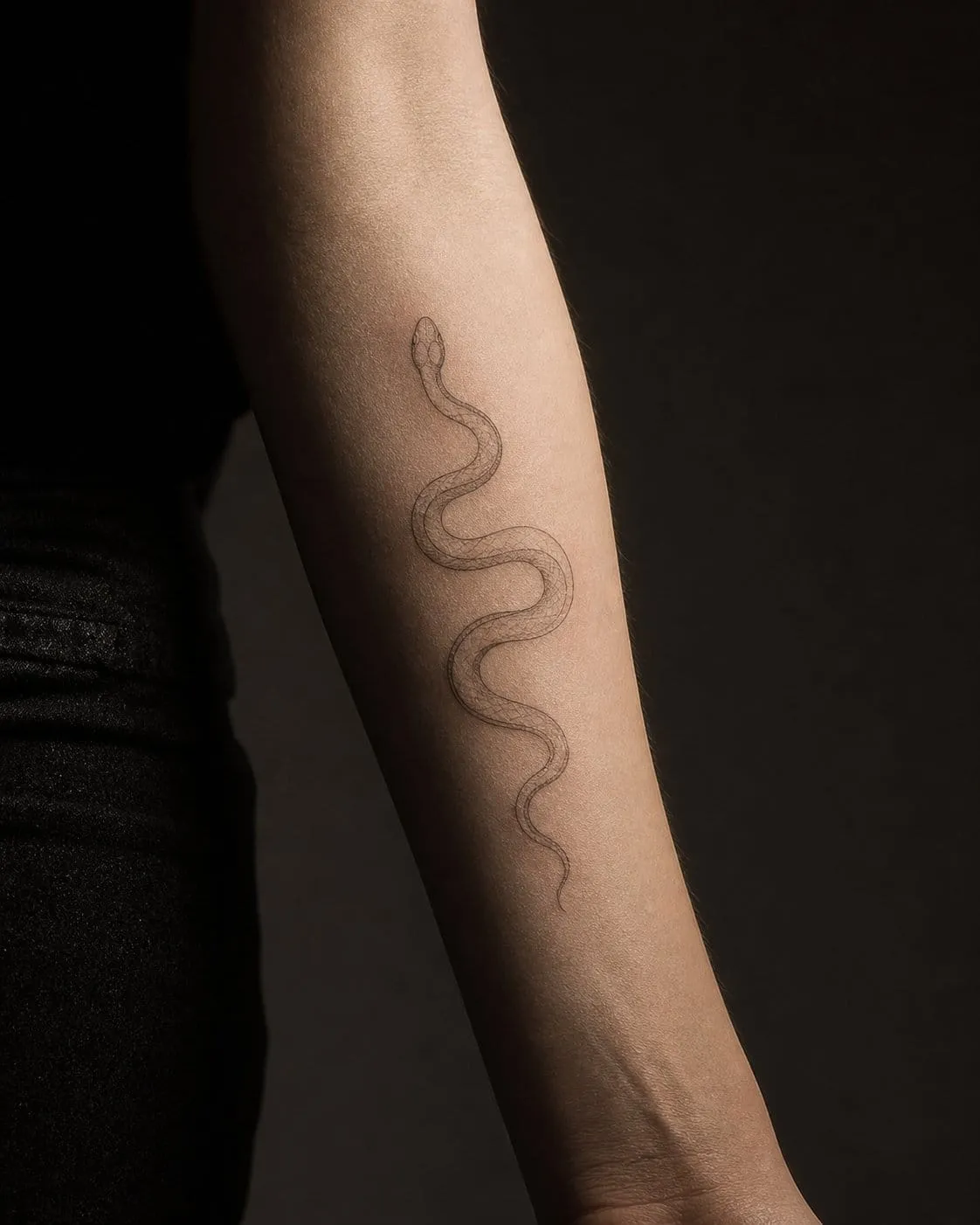
Fine line tattooing uses single or very small needle groupings to draw hair-thin lines and whisper-light shading. A fine-line snake is delicate, elegant and intimate — the anti-hero of snake tattoos, all curve and negative space rather than weight and color.
Realism
The snake, photographed in ink.
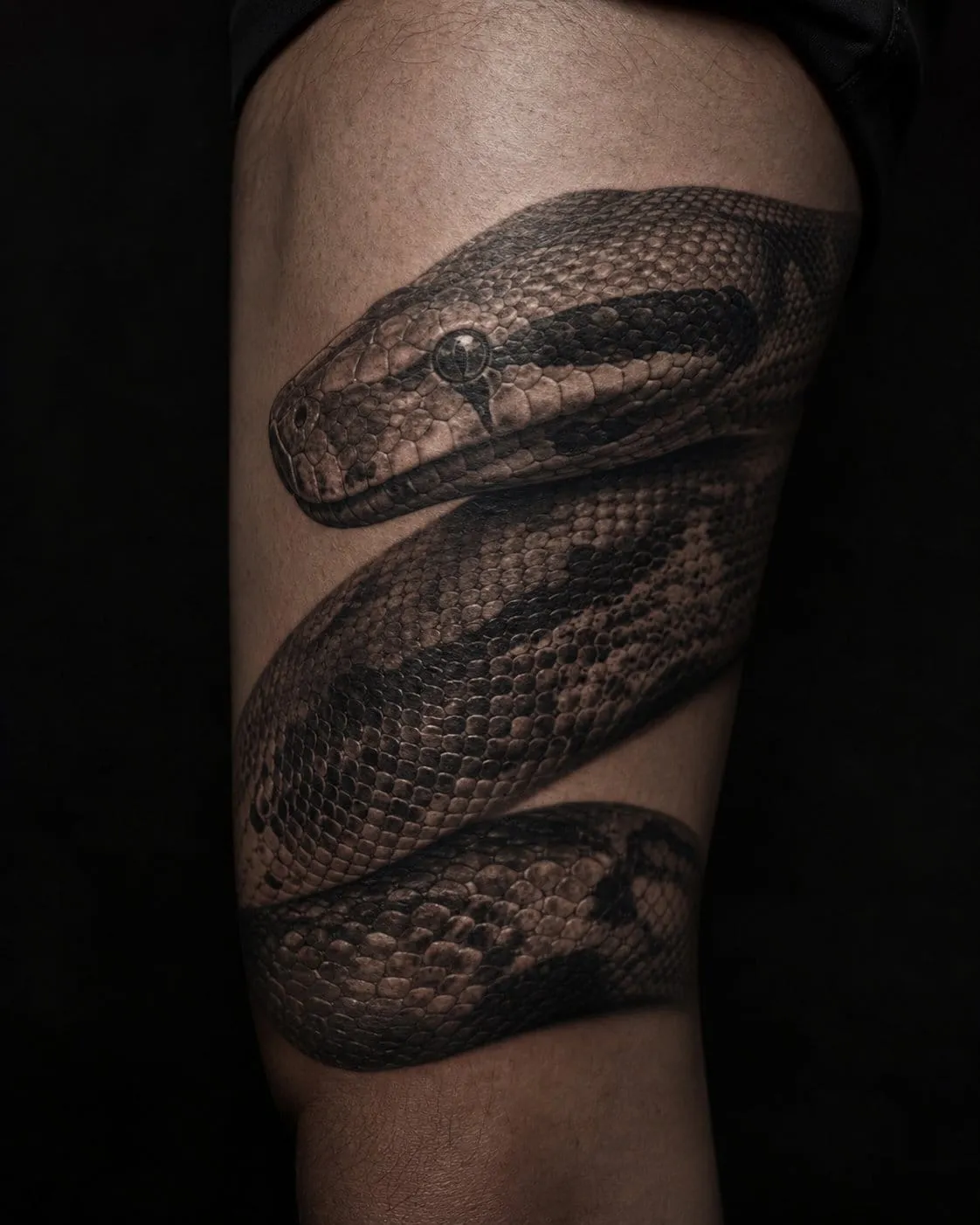
Realism attempts the illusion of a photograph — dimensional scales, glinting eyes, soft focus and true-to-life anatomy. A realistic snake tattoo can be so convincing it looks wet to the touch. It is the most technically demanding way to wear a serpent.
Black & Grey
Shading does all the talking.
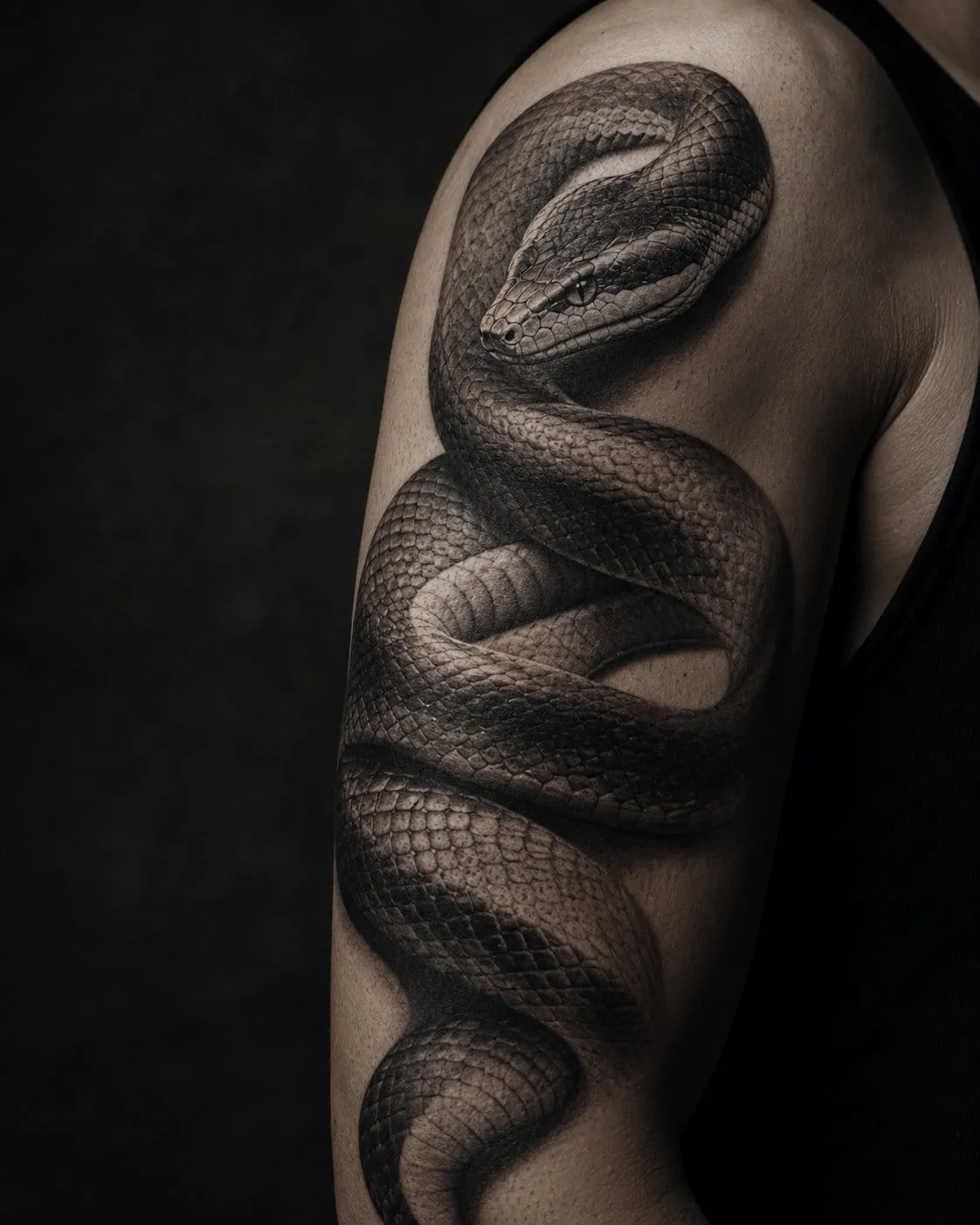
Black-and-grey tattooing builds form entirely from black ink diluted into washes of grey. It is the middle ground between bold linework and full realism — soft, dimensional, and timeless. A black-and-grey snake relies on smooth gradients to give the body weight and motion.
Minimalist
One line, whole idea.
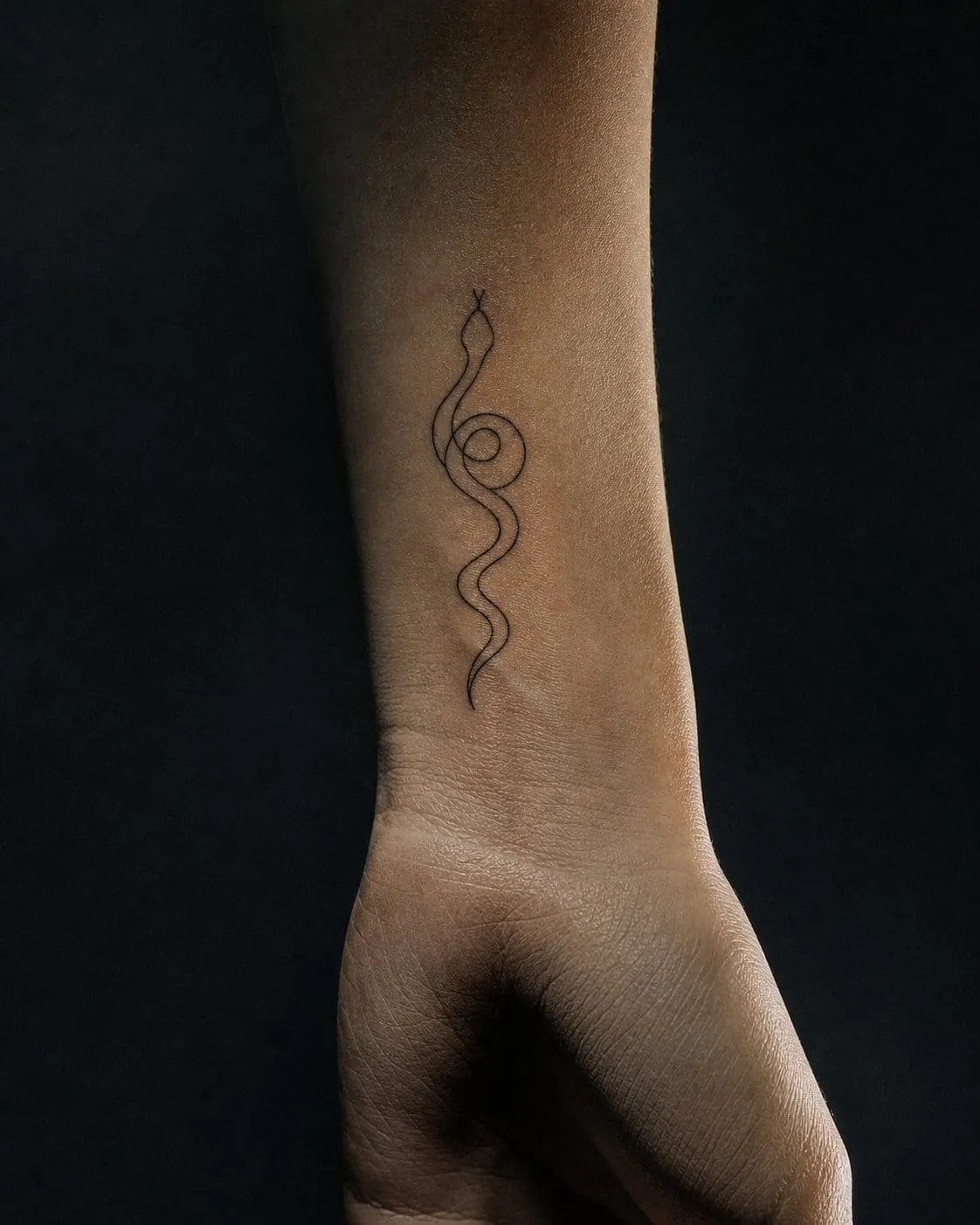
Minimalist tattooing strips the snake to its essence: a single continuous line, a clean silhouette, or the smallest possible mark that still reads as serpent. It is the most wearable end of the spectrum — quiet, modern and easy to place anywhere.
Illustrative
Drawn, not printed.
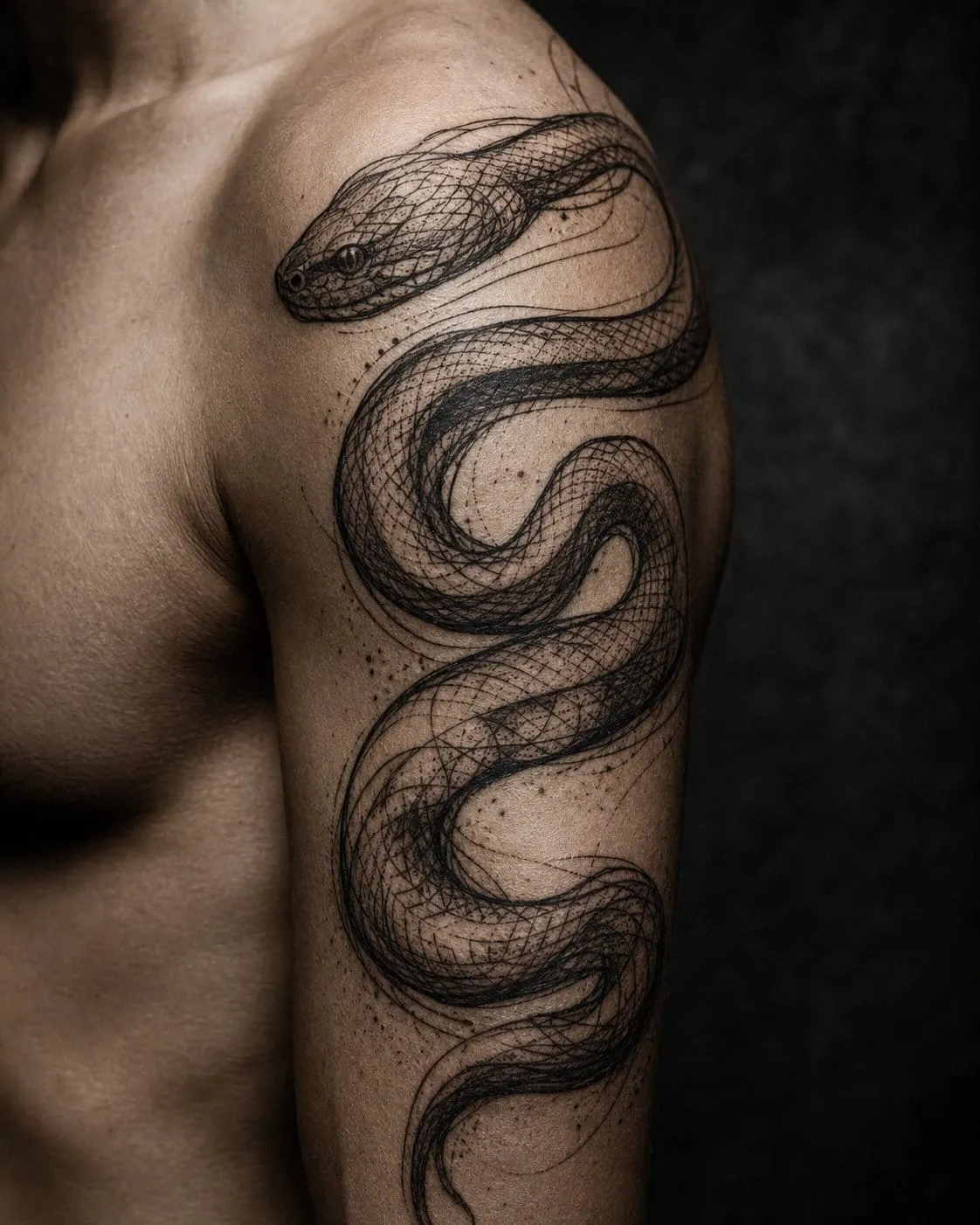
Illustrative tattooing looks like the artist drew it by hand — varied line weight, sketch-like energy, stippled shading and a sense of the artist behind the work. An illustrative snake has personality: expressive, editorial, closer to a drawing in a sketchbook than a photograph.
Geometric
The serpent, engineered.
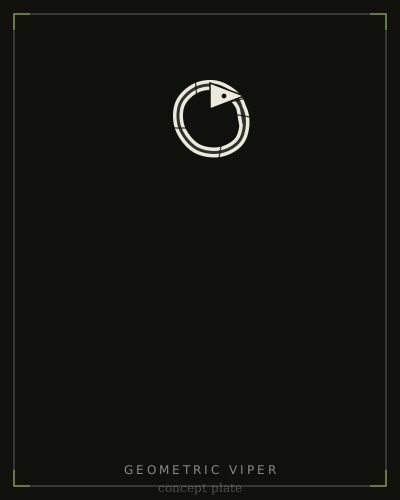
Geometric tattooing rebuilds the snake from lines, facets and sacred-geometry patterns. A geometric snake is architectural — part animal, part diagram. It suits people who love precision, symmetry and the tension between the organic curve and the straight edge.
Dotwork
Patience, rendered in a million points.
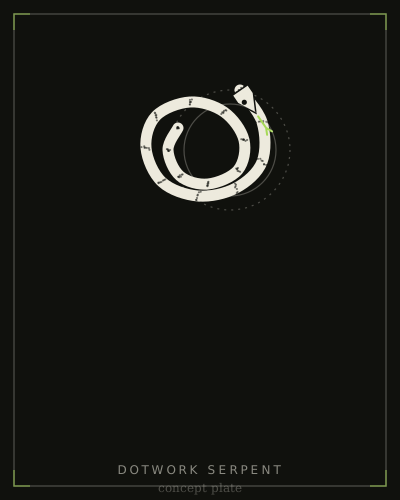
Dotwork builds shading and form from thousands of individual dots, often paired with blackwork, geometry or mandala motifs. A dotwork snake has a soft, meditative texture — gradient that dissolves into skin like smoke. It is slow to tattoo and unmistakable in finish.
Ornamental
Filigree, symmetry, and the decorative serpent.
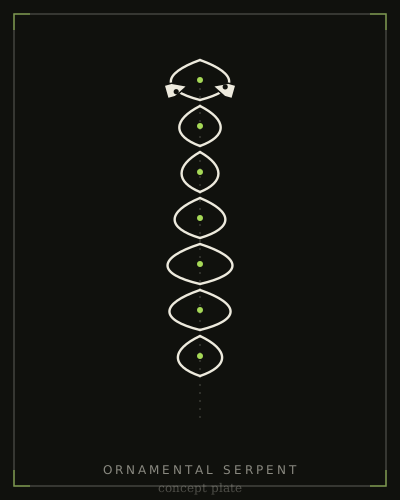
Ornamental tattooing treats the body like jewelry — symmetrical filigree, fine linework, and decorative motifs drawn from historical ornament. An ornamental snake is elegant and symmetrical, more adornment than image, often flowing down the spine or sternum.
From vague idea to a concept you can take to an artist.
Explore the library, save what moves you, then build a direction — style, species, placement, size and mood — and turn it into a brief.