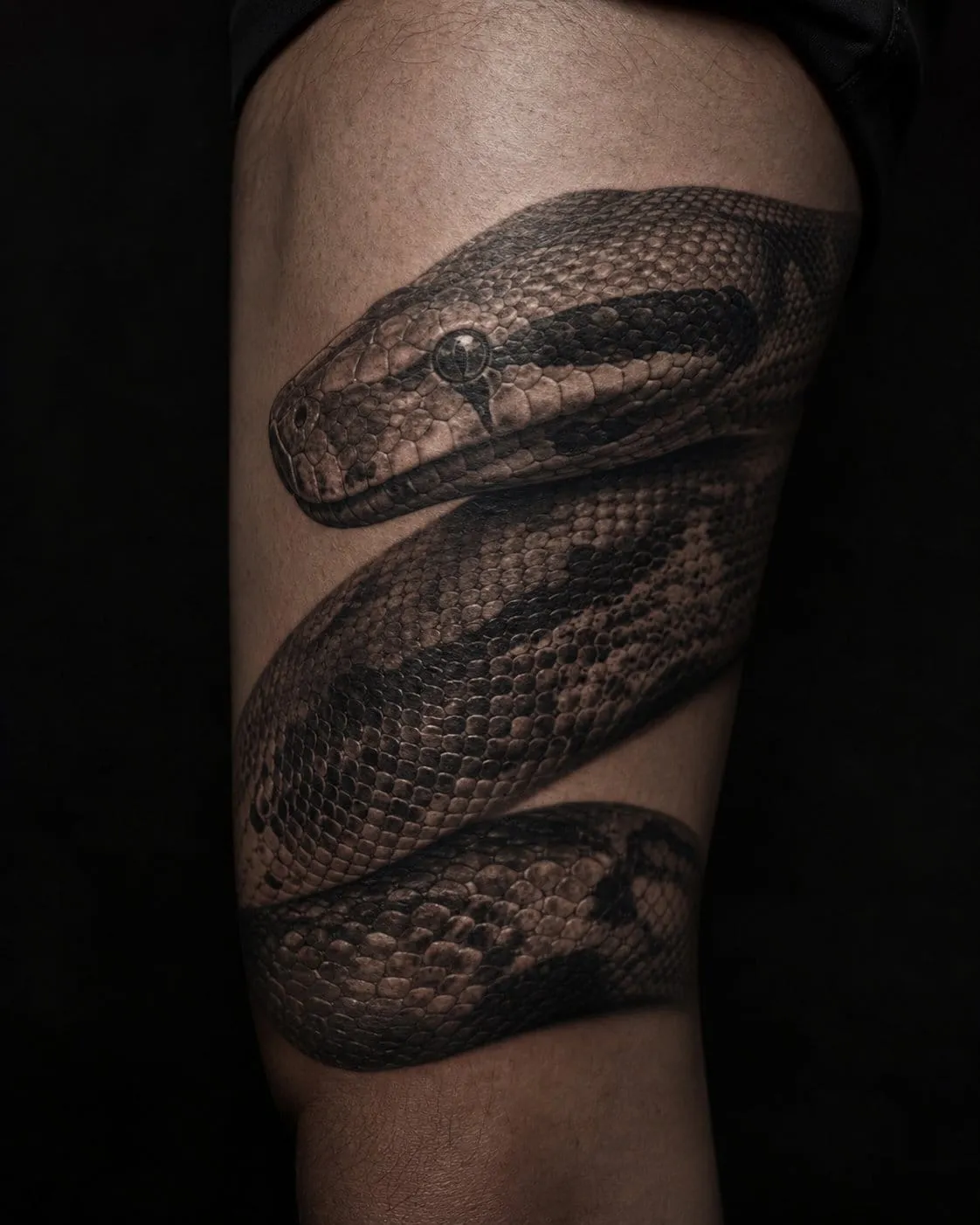
 AI concept
 Style guide
Realism
The snake, photographed in ink.
Realism attempts the illusion of a photograph — dimensional scales, glinting eyes, soft focus and true-to-life anatomy. A realistic snake tattoo can be so convincing it looks wet to the touch. It is the most technically demanding way to wear a serpent.
What defines it
- Photographic shading and depth
- True-to-life scale texture
- Accurate anatomy and proportion
- Usually black-and-grey, sometimes muted color
How snakes behave here
The snake is rendered from real reference — species-accurate head shape, eye position, scale pattern and posture. Often shown head-focused or mid-coil with a shallow depth-of-field effect.
Where the detail works
Everywhere, and it must be right. Scales, lighting and texture have to be anatomically plausible or the illusion collapses.
Best sizes
Large. Realism needs area for smooth gradients and fine texture.
Common combinations
FlowersPortraitsSkullWater dropletsRoses
Good placements
This style reads best on these areas:
What to ask your artist
- Can I see healed realism — how does the shading settle?
- Which species will you use as reference?
- Where will the light source be so the snake looks dimensional?
Honest limits
Heavily dependent on the artist. Realism heals softer than it looks fresh, and a mediocre realist tattoo is worse than a clean traditional one.
Explore the style
Read more in the field guide, or start a concept in this style.
Related designs
See all → AI concept  Original plate
 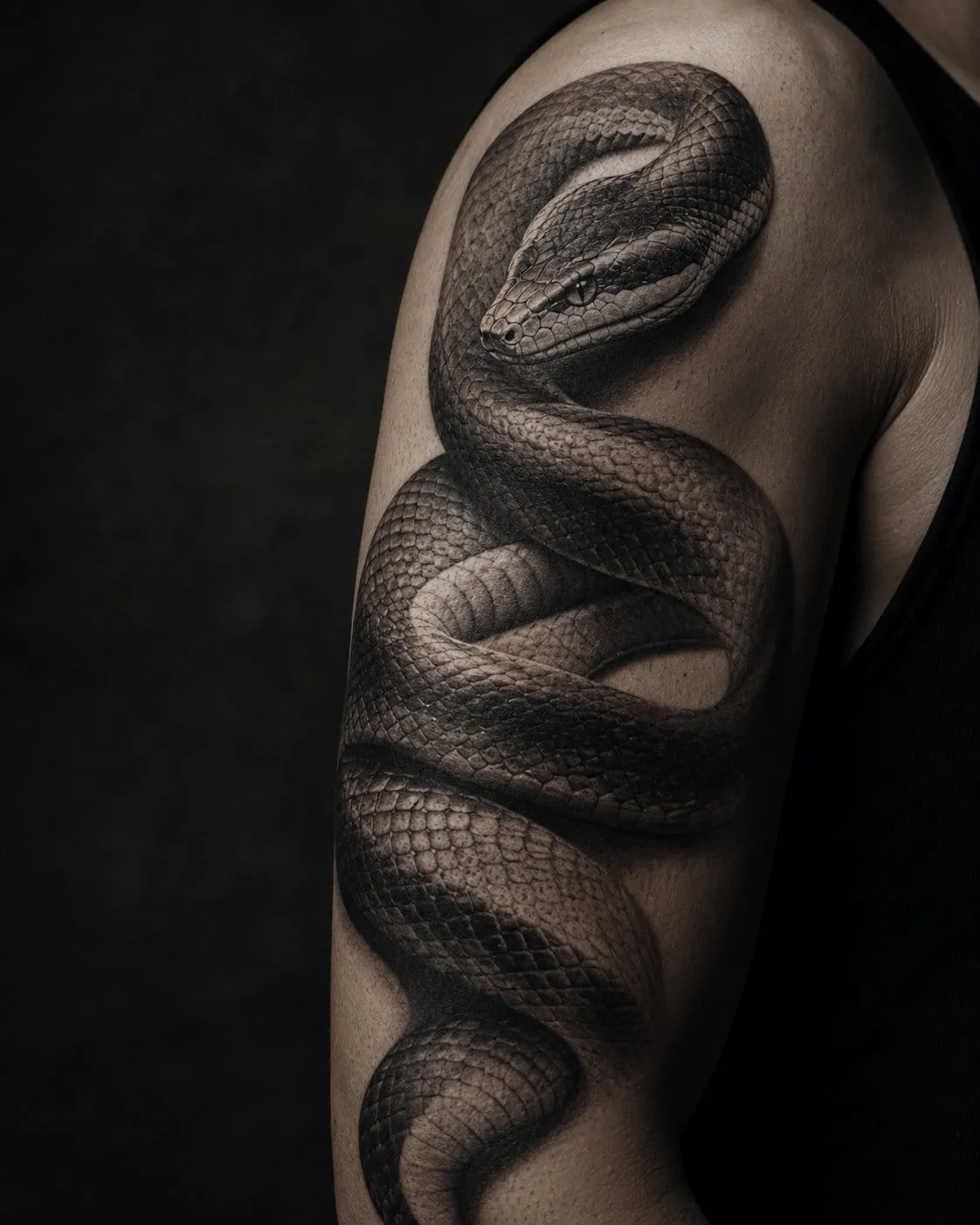 AI concept
 From vague idea to a concept you can take to an artist.
Explore the library, save what moves you, then build a direction — style, species, placement, size and mood — and turn it into a brief.